











Puzzle Game Development Services

We help studios and publishers build puzzle games that keep players coming back, from concept through launch and live ops.

What Is Puzzle Game Development?

Puzzle games are one of the most-played genres on mobile and web. They're also one of the hardest to get right. The mechanics need to feel fair. The difficulty curve has to hold attention without tipping into frustration. And underneath all of it, the architecture has to support months or years of content updates without the whole thing falling apart.

That's where a dedicated puzzle game development company makes the difference. Innovecs Games works with publishers, studios, and product teams who need more than a dev shop. They need people who understand player retention, user engagement, and what it actually takes to ship on time.

Our team has shipped puzzle projects across mobile, browser, and PC. We cover the full cycle: game design, engineering, UI/UX, QA, and post-launch support. Whether you're starting from scratch or need co-development muscle on an existing title, we're here for you.

Trusted by
Industry Leaders
11+
Years in Game Development
300+
Games Successfully Delivered
100+
Satisfied Clients
200+
Skilled Developers & Artists
11+
Years in Game Development
300+
Games Successfully Delivered
100+
Satisfied Clients
200+
Skilled Developers & Artists

Discover Our Puzzle Game Portfolio

Real projects, real results. Different genres, different platforms, different client goals. Take a look at how we approach design, development, and execution when there's actually something at stake.
2d art
game-dev
2d art
Animation
game-dev
2d art
Animation
game-dev
2d art
Animation
2d art
game-dev
CO-dev
CO-dev
2d art

Our Puzzle Game Development Services

Mobile Puzzle Game Development

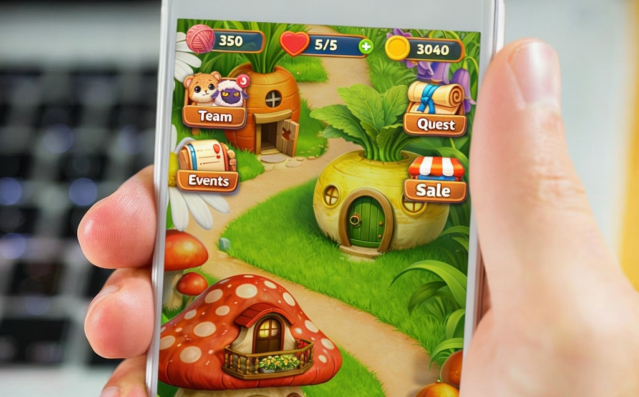
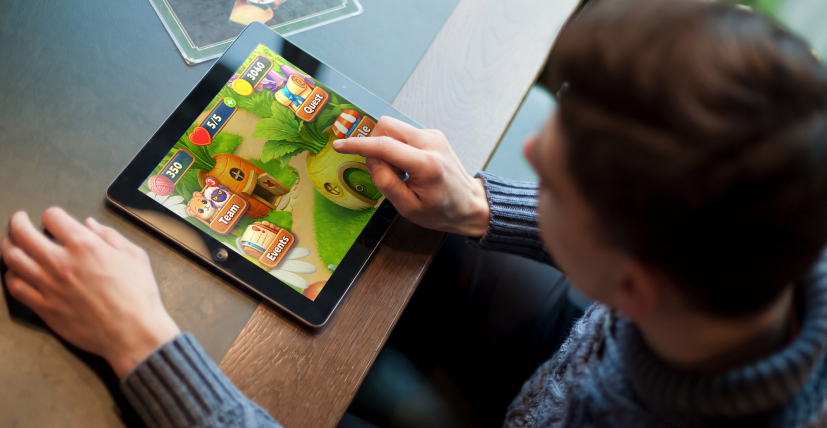
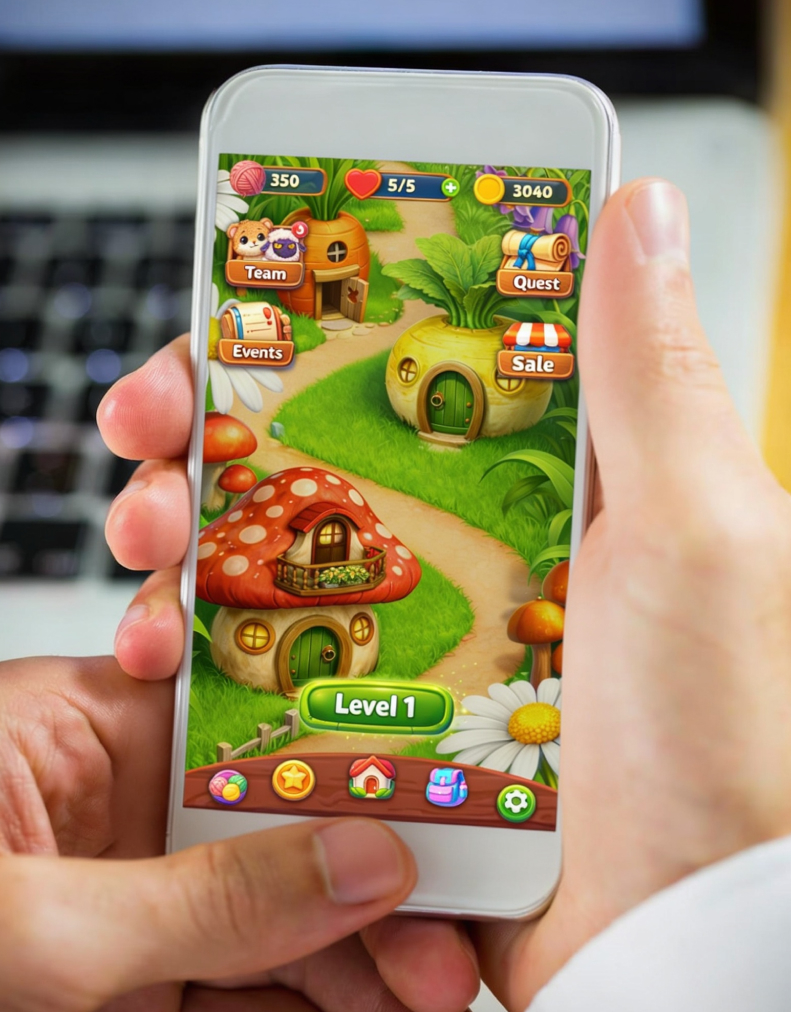
Mobile is where puzzle games live. Most of the genre's biggest titles, match-3, hidden object, escape room game, word puzzle, built their audiences on iOS and Android, and competition for installs and retention is intense. We build mobile puzzle games with the genre conventions players expect and the performance headroom the stores demand. Touch controls that feel native, fast load times, in-app purchases integrated into the progression without breaking the core loop. We handle both platforms and target the full range of devices, not just flagships.

Web and Browser Puzzle Games

Browser puzzle games have had a quiet revival. HTML5 and WebGL now support experiences that used to need a native install. The distribution story is genuinely compelling for certain business models: link sharing, embedded play, no friction to the first session. We develop web puzzle games in HTML5 and WebGL with cross-platform compatibility and responsive layouts. Good fit for casual-leaning products, educational games, and publishers who want web as a primary or supplementary channel.

Match-3 and Tile-Based Game Development

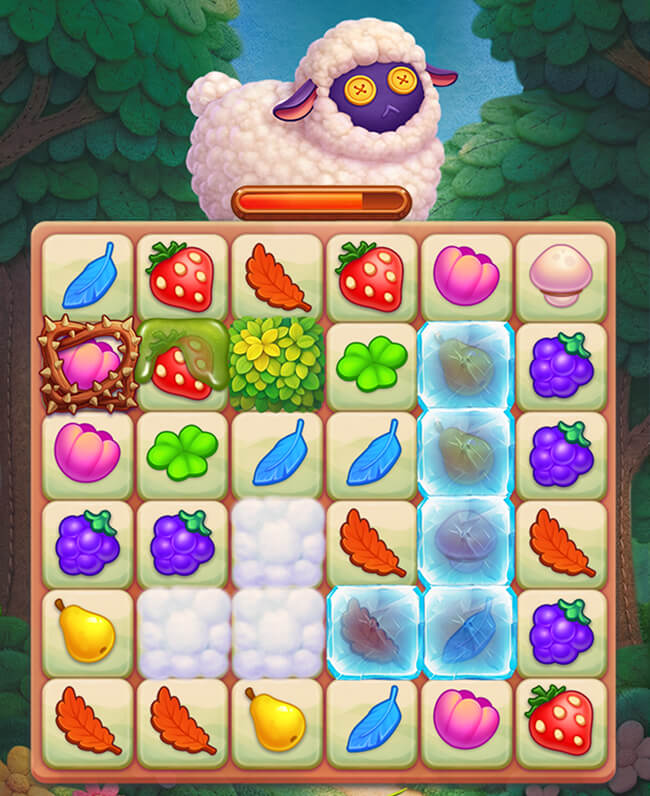
Match-3 is a proven formula, but the execution gap between titles that stick and titles that stall is enormous. The difference usually comes down to level design philosophy, meta progression, and how monetization is integrated into the core loop rather than bolted on top. We've built match-3 and tile-based games from the ground up and know where the friction points are. Our team designs level progressions that hold difficulty balance across hundreds of stages, not just the first twenty.

Hidden Object Game Development

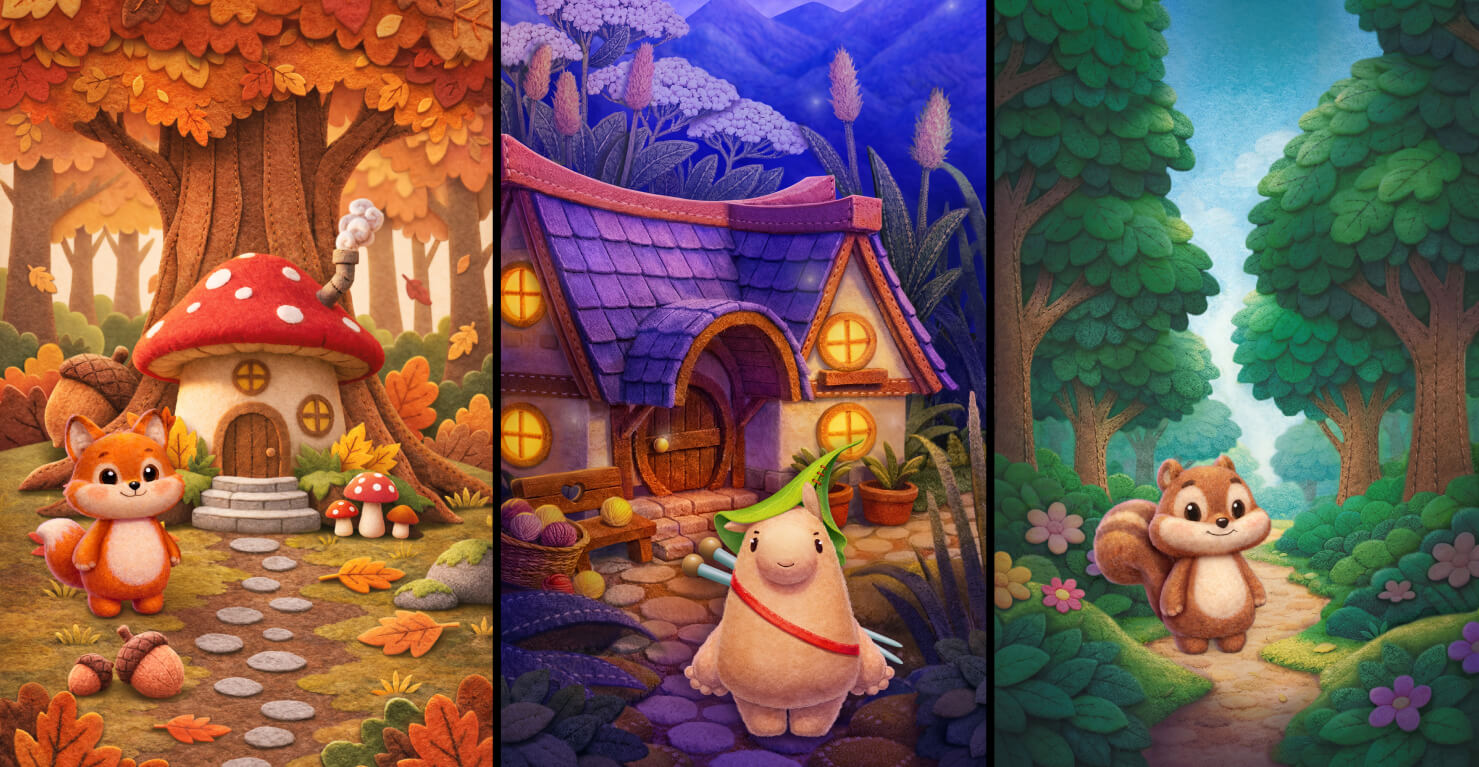
Hidden object games have a loyal audience and a distinct production rhythm. Heavy on illustrated environments, narrative structure, and scene variety. They also require a level of art direction consistency that's easy to underestimate. We handle the full scope: scene design, object placement logic, narrative scripting, hint systems, and the UI patterns hidden object players specifically expect. We can work with your existing art direction or bring our own keyart and production art capabilities to the project.

Logic and Physics Puzzle Game Types

Logic puzzles and physics-based games sit at the design-intensive end of the spectrum. The mechanics have to be airtight. Players in this category will find every exploit, every softlock, every shortcut. We build these games with a strong QA and playtesting loop baked into the process from early prototype stages. Our level designers have worked on grid logic, spatial reasoning, and physics sandbox titles. Solvability gets tested systematically, not just by feel.

AR Puzzle Games

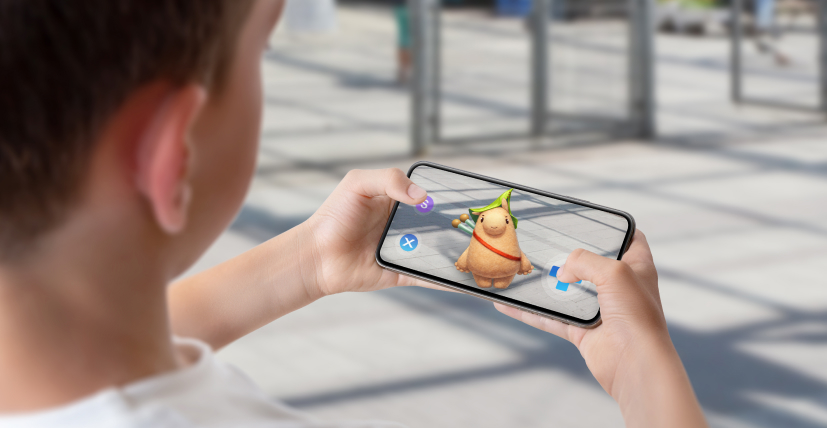
AR puzzle games are a smaller category but one with real differentiation potential for the right product. Placing puzzle elements in physical space changes how players interact with difficulty and environment. We build AR puzzle games for iOS (ARKit) and Android (ARCore), with attention to the anchoring, occlusion, and lighting challenges AR introduces. Best suited for teams with a clear AR-native concept rather than a standard puzzle game retrofitted with a camera.

Puzzle Game UI/UX and Level Design

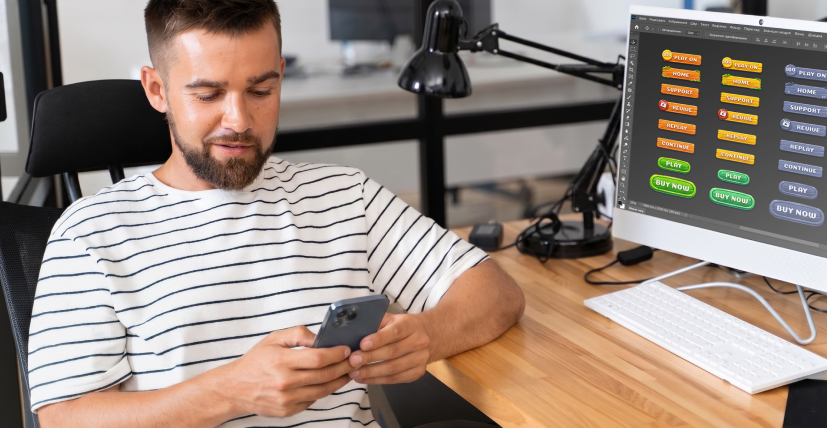
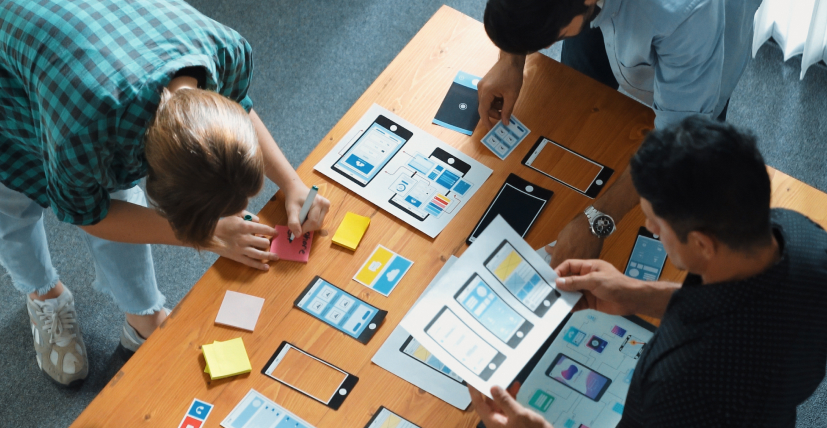
UI and level design are where most puzzle games quietly lose players. Menus that feel slow, level maps that obscure progression, tutorials that over-explain or leave players stuck on the first real challenge. We offer puzzle mechanics design, UI/UX, and level design as standalone services within a larger puzzle game development engagement. Our designers work from player psychology and genre conventions, not just visual preference. The goal is rewarding gameplay that holds up across hundreds of levels, not just the first ten. Level design deliverables include documented difficulty targets, solution paths, and playtest results.

Co-Development and Porting

Not every project starts from zero. We take on co-development engagements where a studio needs to expand capacity mid-project: engineering support, additional level design output, QA depth, or art production. We also handle porting, taking an existing puzzle game and bringing it to a new platform without losing what made the original work. Both engagement types start with a codebase and documentation review so we know exactly what we're working with before committing to a timeline.

Ready to Build
Your Puzzle Game? Let's Talk.

If you're planning a puzzle game development project and want to discuss specifics, we're available for a free consultation. Tell us what you're building and we'll come prepared with real questions, not a sales deck.

Tools and Expertise

We work across the engines, platforms, and development tools the industry actually uses. Unity, Unreal Engine, Godot, HTML5, WebGL, ARKit, ARCore. Our engineers write in C# for Unity projects and C++ / Blueprints for Unreal. Most mobile builds are designed mobile-first with scalable architecture so they hold up as content grows. Whatever your project needs, we're not pushing you toward an unfamiliar stack.
partner
partner
partner
partner
partner
partner
partner
partner
partner
partner
partner
partner

Production Process

We follow a structured delivery process on every project. Here's how it works.

Discovery and Concept Design

We start by getting specific about what you're building and why. Reviewing existing documentation, aligning on genre, target platform, audience, and business model, and stress-testing the core mechanic before any code gets written. Deliverables: concept document, feature list, technical feasibility assessment. The puzzle game development process starts here, not in production.

Prototype and Mechanics Validation

Before committing to full development scope, we build a playable prototype of the core loop. Usually two to four weeks. Tests whether the central mechanic actually feels right when someone plays it. Scope and timeline get locked after this stage, not before.

Full-Cycle Development

The main production phase. Engineering, art integration, level design, UI implementation, audio integration. Everything runs in two-week sprints with defined deliverables and a shared project tracker the client can see at any time. You see progress every sprint.

QA and Playtesting

QA starts before the end of production. Our team runs functional, regression, and device testing in parallel with the final development sprints. Playtesting with target-audience players happens at least twice before submission: once at feature-complete and once after QA fixes.

Launch and Store Submission

Build preparation, metadata, compliance with current store review guidelines, and first-response coordination if a review flags an issue. We've shipped enough titles on both major app stores to know where things tend to go sideways.

Live Ops and Post-Launch Support

Bug fixes, content updates, A/B test implementation, live ops feature development. Clients who want ongoing support retain a team allocation rather than starting a new engagement from scratch each time.

Why Choose Innovecs?

Our puzzle game developers have shipped titles across mobile, web, and PC: match-3, hidden object, logic, word, AR, and casual formats. That experience shows up in the design calls and technical decisions, not just the portfolio.

Puzzle Genre Expertise

Our team has worked across the major puzzle genres and knows where the common production problems are. Level balance that falls apart at scale. Hint systems that players ignore or abuse. Monetization that undermines the core loop. We've seen most of it and know how to build around it from the start.

Proven Track Record

Innovecs Games has delivered over 200 game projects. We're a puzzle game development company with designers and engineers who have shipped titles with millions of downloads.

Flexible Engagement Models

Full-cycle development as a puzzle game development studio, co-development embedded in your production, or a dedicated team that works as an extension of your in-house setup. Scope, team size, and engagement length are set to fit your project. IP ownership stays with you.

Transparent Delivery and IP Ownership

Clients get full access to the project tracker, sprint demos, and build history. Source code and all assets transfer at project close. We don't retain licensing rights on work product.

What Our Clients Say

Don't take our word for it. Here's what the people we've worked with have to say.
Partnering with Innovecs has been a great benefit to our team and project. The work they produce for us is always on time, within budget, and of the highest quality! Innovecs has made a positive impact with us!
Shane Nakamura
Art Director at Jam City
When looking to outsource art assets for some of our projects I was fortunate to sign with Innovecs. I remembered them as easy to co-work with, they weren’t afraid to take our challenges and delivered top-notch content.
Artem Nabatov
Head of Studio at Gameloft
I value the professionalism and the commitment of Innovecs as a company and the developers I personally got to work with. The human resources are of the highest quality. I definitely plan to work with them again and increase the capacity of cooperation in the future.
Shahar Sorek
Founder and CEO at 7 Elements Studios

Related Services

We provide a full range of services covering marketing art, technical art, UI/UX, and game engineering.

Casual Game Development

Puzzle, merge, match-3, turn-based strategy. We build casual games for Western mobile markets with a focus on retention, monetization, and mechanics that hold up past the first session.

Hyper Casual Game Development

Fast to build, fast to market. We develop hyper casual titles with tight core loops and first-session hooks designed to drive downloads and keep players coming back.

Mobile Game Development

End-to-end mobile game development for iOS and Android. From early prototyping through launch and live ops support, we build mobile games that compete in crowded markets.

Game Art Services

A UI that looks good but confuses players is a problem. So is one that works fine but feels cheap. Our team handles the full UI/UX pipeline, from early wireframes through to final implementation, making sure what gets built feels intuitive, holds up through testing, and actually fits the game it's part of.

FAQ

What does puzzle game development include?

It covers the full range of work to take a game from concept to a shippable product: game design, core mechanic development, level design, UI/UX, art integration, engineering, QA, and store submission. At Innovecs Games, a full-cycle engagement includes all of these. Co-development or specialist engagements cover the subset relevant to your project. We scope each engagement based on what you already have and what you need.

How long does it take to develop a custom puzzle game?

Depends heavily on scope. A realistic range for a mobile puzzle game built from scratch is five to twelve months. A simple single-mechanic casual game with thirty to fifty levels can reach launch-ready state faster. A match-3 with meta progression, live ops infrastructure, and a couple hundred levels takes longer. We give timeline estimates after the discovery phase, when scope is defined, not before.

What is the typical cost of puzzle game development?

Costs vary by team size, timeline, and feature scope. A minimal viable puzzle game for mobile typically starts in the mid five figures. A full-featured title with AI-driven level generation, multiplayer, and a large level library is a six-figure engagement. We provide detailed estimates after discovery. Clients can also engage us for a scoped prototype first, lower commitment, real output, before committing to full development.

Which platforms do you develop puzzle games for?

iOS, Android, web (HTML5 / WebGL), and PC. Most mobile puzzle game projects ship on both iOS and Android simultaneously. Web builds are common for casual puzzle games targeting browser audiences or publishers using web alongside mobile. We also handle porting if you have an existing title on one platform and want to bring it to another.

What puzzle game genres does Innovecs Games specialize in?

Match-3, hidden object, word puzzles, logic and physics puzzles, escape room hybrids, AR puzzle games, and casual puzzle game development. These cover the categories where most of our work sits. If your concept blends multiple formats, which a lot of good puzzle games do, talk to us and we'll tell you honestly whether it fits our experience set.

Can you co-develop or enhance an existing puzzle game?

Yes. Co-development is a significant part of what we do. Studios bring us in when they're behind on a milestone, need to scale up temporarily, or require specialist skills like level design depth, QA capacity, or technical art work, without making a permanent hire. We start with a review of the existing codebase and documentation to scope the engagement accurately.

How do you ensure puzzle game quality and playability?

QA runs throughout production, not just at the end. We use automated solvability testing on procedurally generated content, device matrix testing across a range of Android and iOS hardware, and structured playtesting sessions with target-audience players. Level design goes through documented review with defined difficulty targets. We track every issue to resolution and don't close bugs that haven't been verified fixed.

What engagement models does Innovecs Games offer?

Several options depending on what you need. Custom development from scratch, where we own the full production process as a full-cycle studio. Co-development, where we embed in your team and contribute to an ongoing project. Dedicated game team, where we provide a stable allocated group that works as an extension of your studio long-term. We also support outsourcing engagements for studios that need specialist capacity without headcount, and white-label game development for clients who want a finished product under their own brand. The model should fit the project, not the other way around.

How is AI used in puzzle game development?

We use AI in a few distinct ways. AI-powered level generation with automated solvability filtering lets content teams produce volume without manual bottlenecks. Procedural puzzle design systems can run at content creation time or live in the game as daily challenges. Adaptive difficulty adjusts parameters based on real session data. Player behavior analytics tell you where players are quitting, which levels have abnormal hint usage, and where the progression breaks down. ML balancing and AI automation tools speed up the testing and tuning work that used to eat weeks of production time. These get scoped as part of the project architecture when they make sense, not added as afterthoughts.

Can AI-generated levels replace manual level design?

Not fully, and we'd be skeptical of anyone who says otherwise. AI-generated levels are good at producing volume within defined constraints. They can generate thousands of valid match-3 boards or logic grid configurations quickly. What they don't do well is craft the narrative pacing, the moment of insight, or the deliberate escalation that makes a level genuinely satisfying. Our approach uses procedural generation for scale and manual design for the levels that need to feel crafted. The combination works better than either alone.
Get in Touch
Have a game idea? Need a reliable partner for development? Let’s build your next hit together.
Nader Alikhani
VP of Innovecs Games
Christopher Rowe
Business Development Director

    Drag & Drop or   Upload Files
    Thank you!
    Your message has been sent. A member of our team will be in touch with you shortly. We appreciate you taking time to connect with us today.