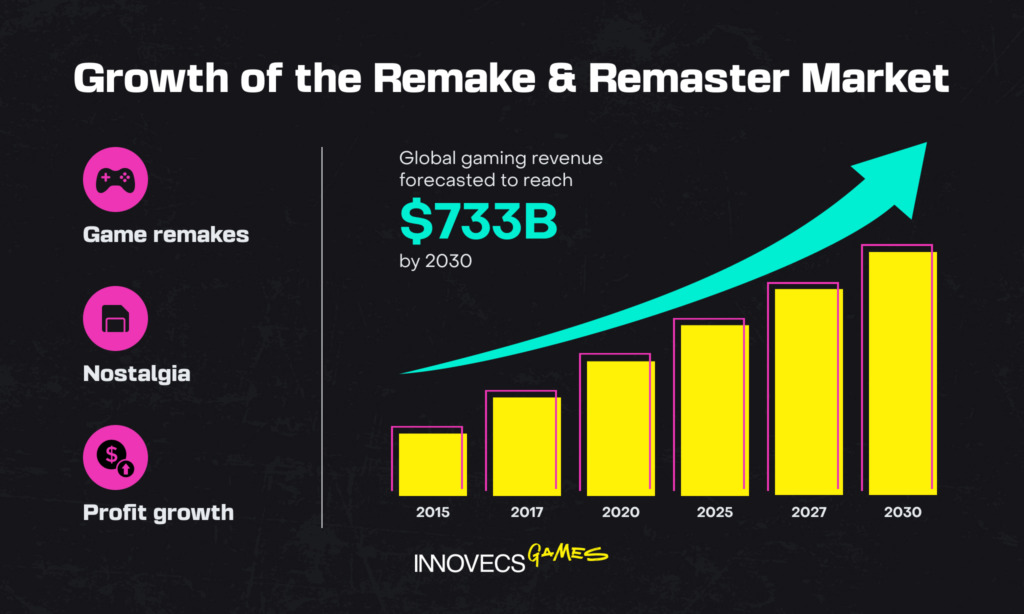
Pursuing a remake or remaster is a complex business decision where the primary goal requires more than just technical skill. It involves balancing creative vision, financial planning, and audience expectations to deliver a product that honors its legacy while succeeding in today’s market. Studios must navigate the tension between nostalgia, and innovation, making strategic choices about where to invest resources, and how to position the final release for maximum impact.
Creative and Technical Challenges
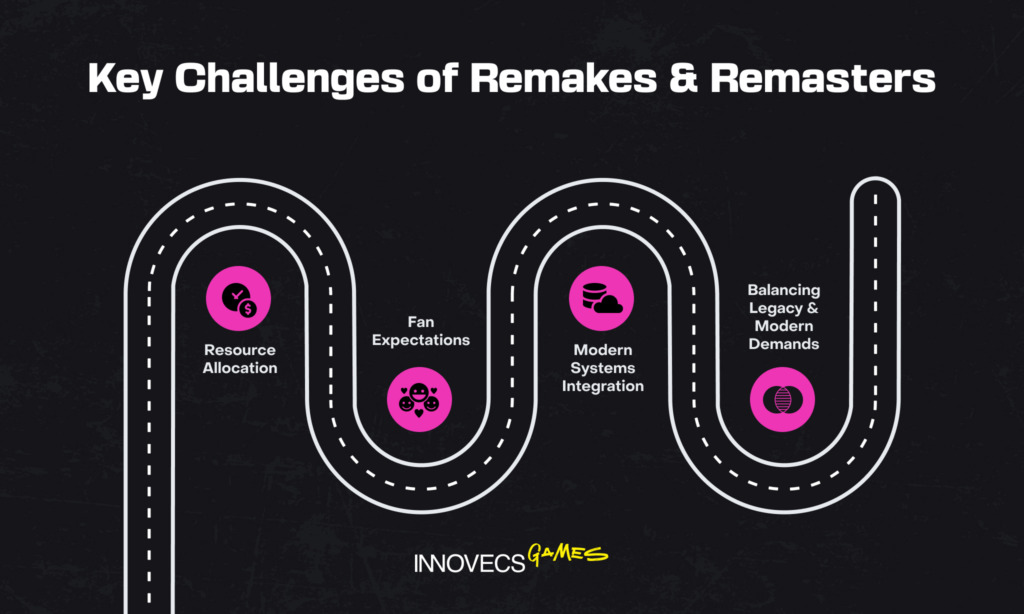
Reviving classic games through remakes and remasters is not without its complexities. Behind every successful adaptation of an existing game lies a careful balance between creativity, technology, and strategy. Developers must navigate a range of production challenges associated with older games, including technical limitations. From managing budgets, and technical demands to meeting the expectations of long-time fans, and new audiences alike, these projects demand not only technical expertise but also a deep respect for the source material. The key creative and technical challenges that shape the development of remakes and remasters include:
Resource Allocation
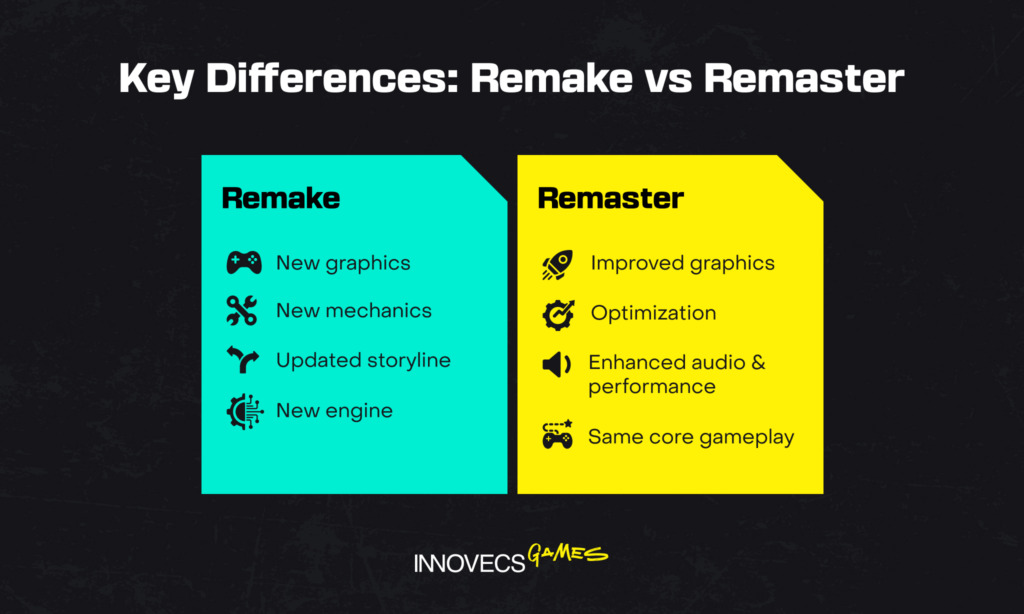
Resource allocation stands as one of the most critical challenges in the development of remakes and remasters. Determining how to divide time, budget, and manpower requires careful strategic planning, as each approach demands a different level of commitment. Remakes typically involve recreating assets, reprogramming systems, and reimagining core elements which often results in higher production costs, and extended development timelines. In contrast, remasters focus primarily on refining existing materials, offering a more cost-efficient process but limiting opportunities for extensive creative reinvention and additional content. Achieving the right balance between financial investment, and projected returns is essential, as it determines not only the project’s success but also the studio’s long-term sustainability.
Managing Fan Expectations
Managing fan expectations is another critical hurdle in the development of remakes and remasters. Classic games often hold deep sentimental value for long-time players, which makes even small creative changes potentially divisive. Developers must carefully update gameplay systems, and user experience features while preserving the emotional and thematic core that made the original game beloved. Straying too far from the source material risks alienating loyal fans, while failing to modernize can make the experience feel outdated to new audiences. Striking this balance requires sensitivity to modern gameplay, transparency, and a clear creative vision. In today’s competitive market, where remakes and remasters are increasingly common, studios must also find ways to differentiate their projects through timing, marketing, and innovation to ensure both critical, and commercial success.
Integration of Modern Systems
The integration of modern systems adds another layer of complexity to the remake and remaster process. Even traditionally single-player titles are now expected to include online features such as cloud saving, live updates, and performance tracking on new platforms. These additions enhance convenience and engagement but also introduce new technical, and financial challenges. Implementing backend infrastructure demands ongoing maintenance, security updates, and additional staff support, all of which increase production costs. Developers must evaluate whether these features meaningfully enhance the player experience and align with the project’s long-term goals. Successfully balancing innovation with practicality ensures that technological upgrades serve the game’s vision rather than overshadow it.
Balancing Legacy with Modern Demands
Reviving a classic game is as much a test of strategy as it is of creativity. Behind every remake or remaster lies a series of decisions that determine how faithfully a beloved title can be modernized without losing its original charm, ultimately enhancing the gaming experience for players. From budgeting and design choices to audience expectations, each factor plays a crucial role in shaping how the past and present meet in a single game experience.
Staying True to the Original
Balancing authenticity with modernization remains one of the greatest creative hurdles for developers. They must preserve the story, charm, and essence of the original while introducing updates that meet current standards. Too much change risks alienating loyal fans, while too little limits appeal to new players.
Market Positioning
Effective positioning ensures a remake or remaster stands out from both its predecessor and competitors. Pricing, promotion, and added features shape player perception, while meaningful upgrades like improved visuals or bonus content reinforce the game’s value in today’s market.
Operational Considerations
Remakes and remasters must also account for ongoing maintenance tied to online features, updates, and performance optimization. These elements enhance the player experience, especially when made available across multiple platforms, but demand strategic financial and technical planning to remain sustainable long after release.