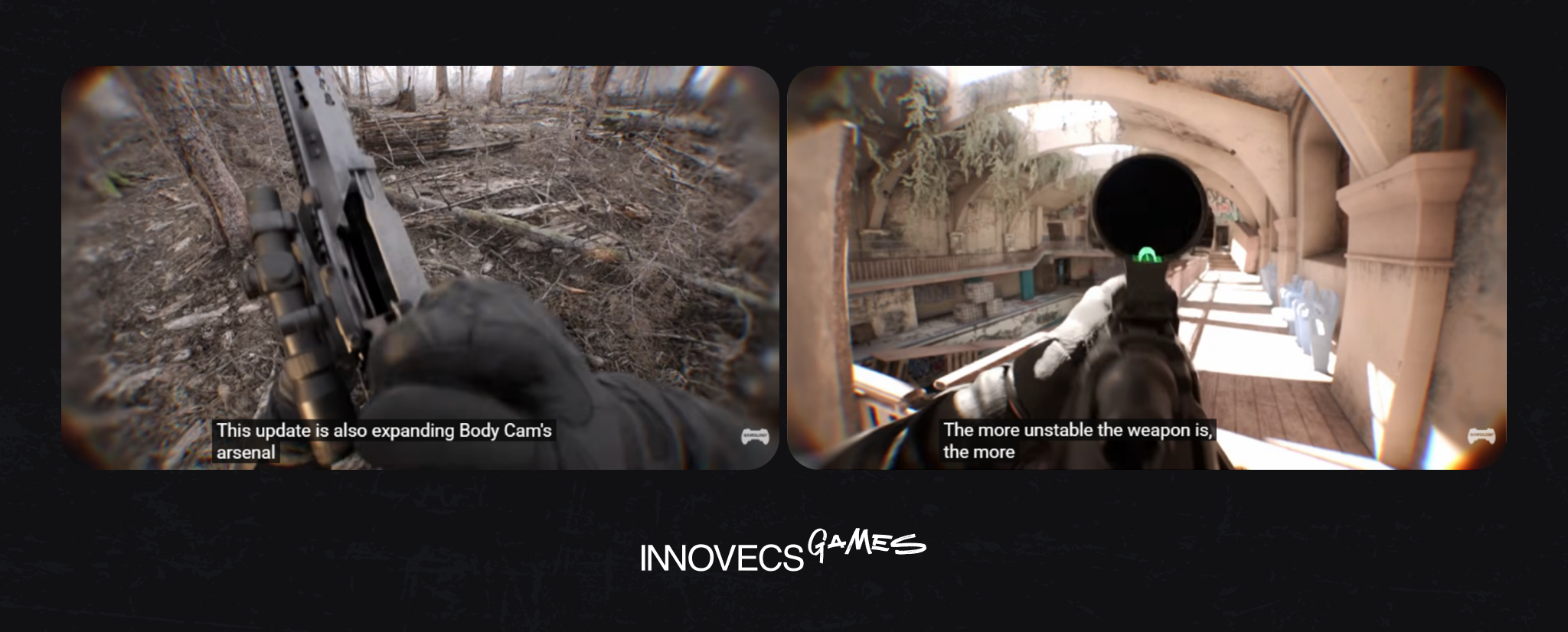
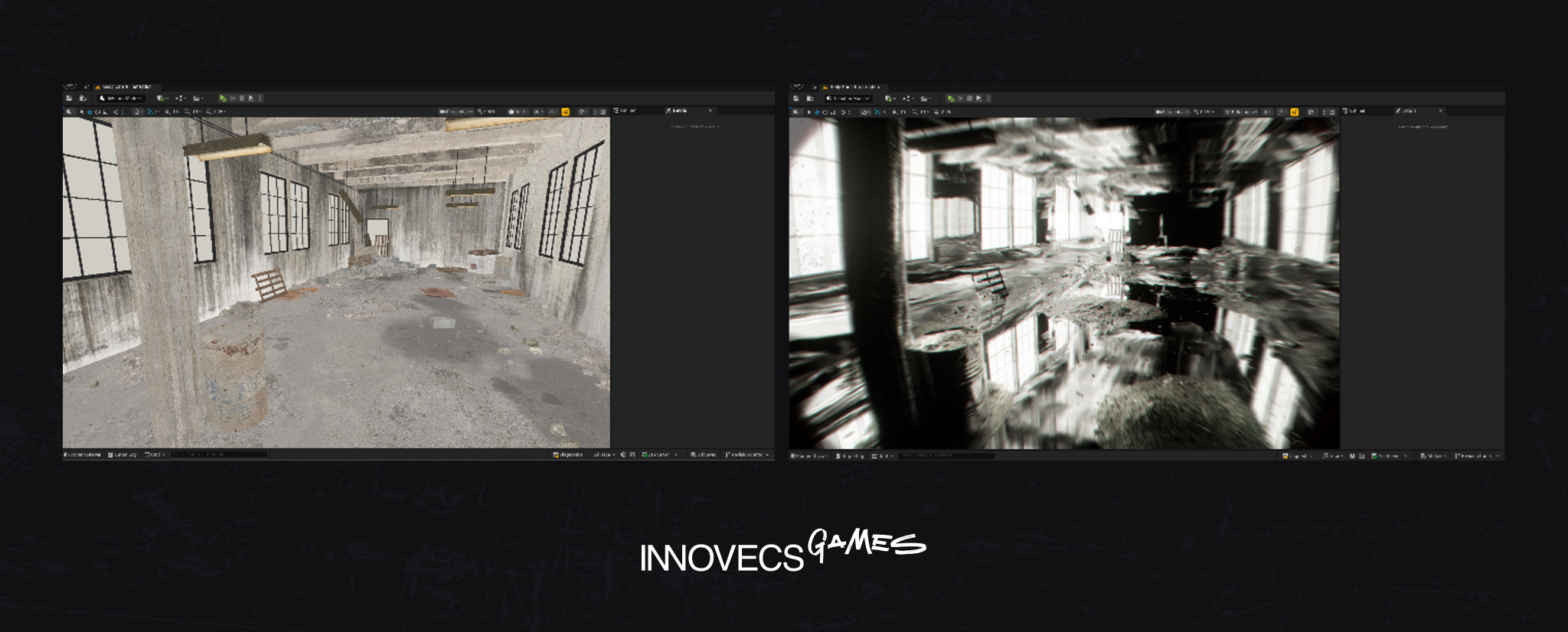
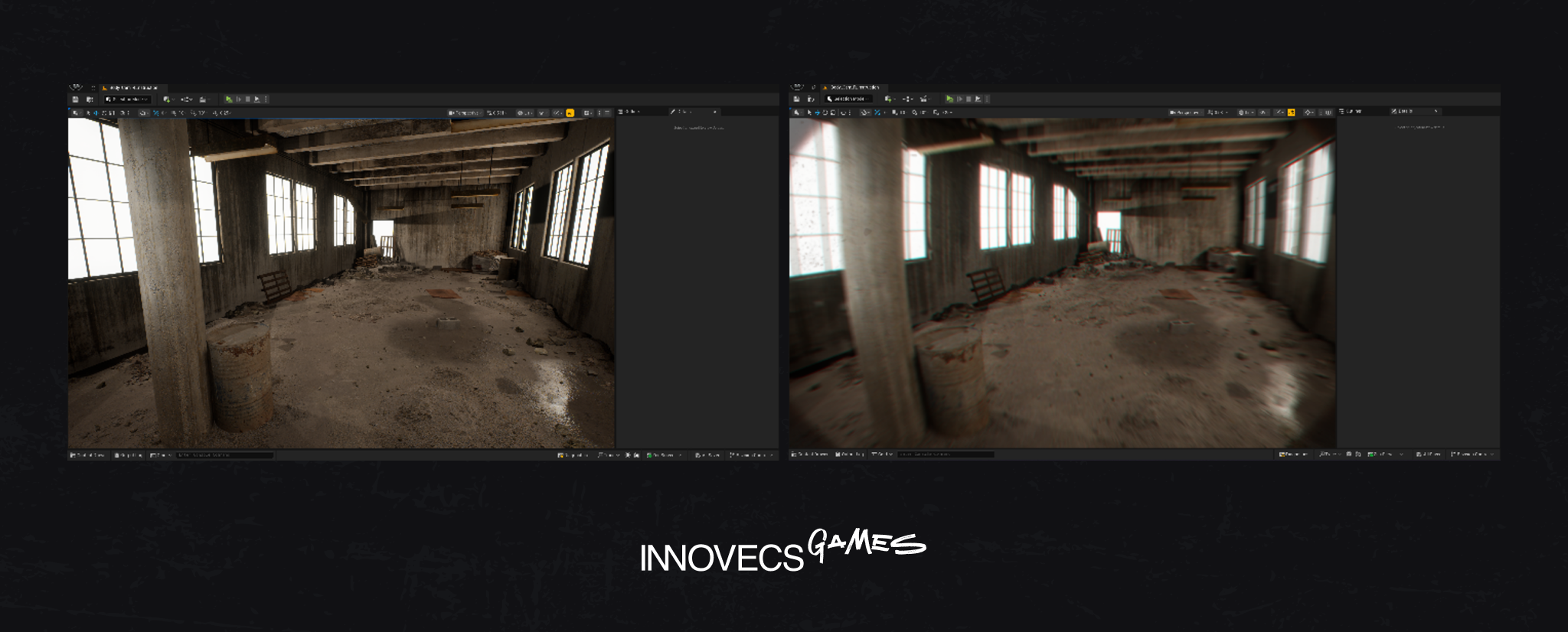
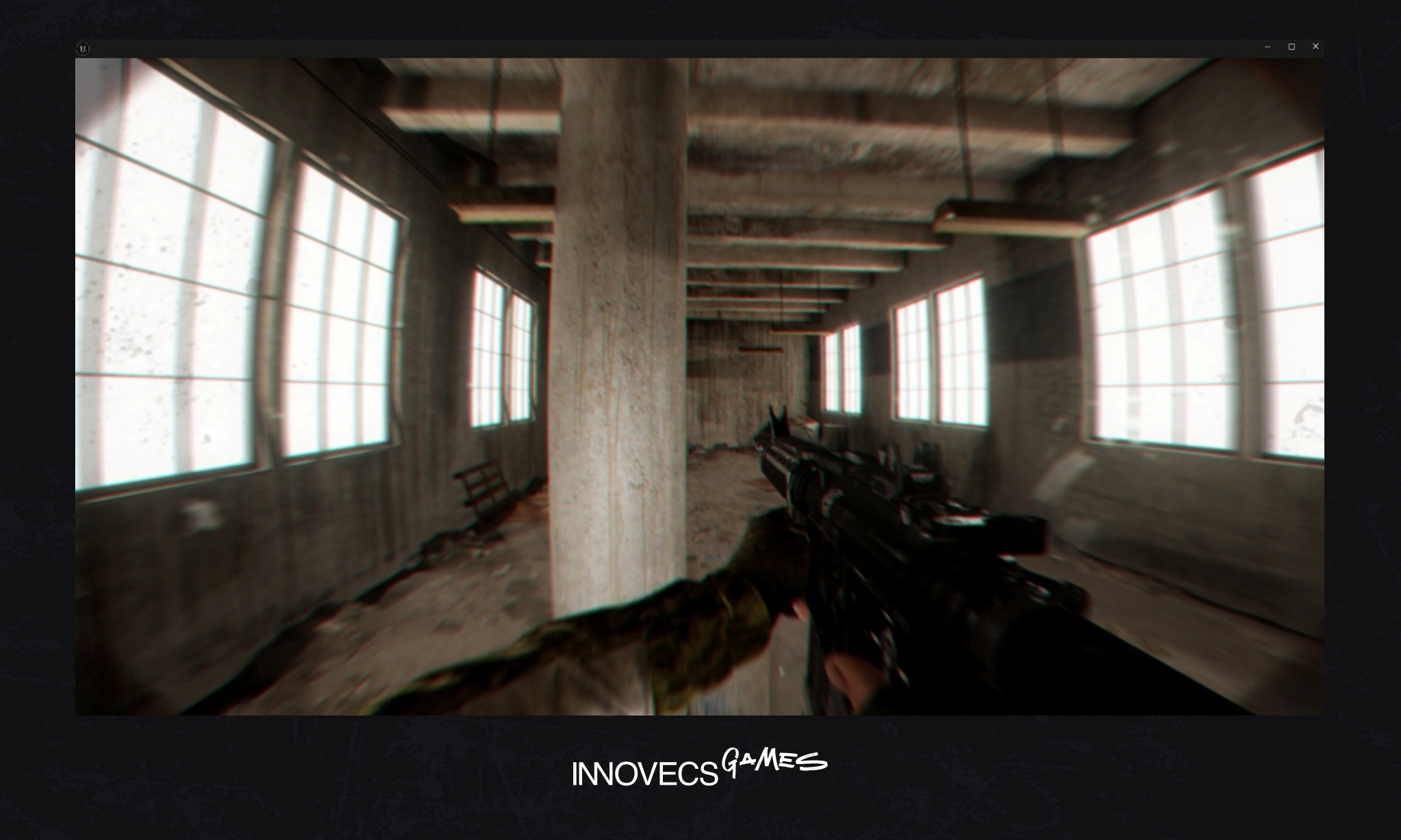
In a conventional first-person setup, the view can follow the player’s orientation almost exactly. Turn the character and the view turns with them. A bodycam has a different physical relationship to the body, so that response cannot feel quite so direct.
That meant introducing lag into the movement. If the player turns quickly, the camera takes a moment to catch up, and when it reaches the new orientation it cannot simply stop dead. I used overlap and settlement so the motion could continue, rebalance, and come to rest with the weight and recovery of a physical device.
The system also had to account for six degrees of freedom: movement along three axes and rotation around three axes. That gave the camera room to react in more than a simple up-and-down motion as the body changed direction, accelerated, or settled.
The distinction mattered from the start. The camera could not be a viewpoint with a collection of effects added afterward. It had to be a fundamental part of the experience, with its behavior influencing how the player perceived movement and the space around them.
Balancing Authenticity with Control
There is a limit, though. Too much lag, distortion, or movement quickly becomes distracting, while making the camera too stable strips away much of the character that makes the bodycam look convincing.
The aim was never to reproduce every imperfection of real footage. It was to identify which characteristics contributed to the experience and translate them into something that still felt readable, responsive, and comfortable to play. That balance mattered as much as the individual camera effects themselves.