Bodycam Breakdown: Building the Illusion Through Balance and Imperfection

We are surprisingly good at noticing when something looks almost real but still feels slightly off. The cause is not always obvious. A scene can be technically strong, highly detailed, and carefully lit, yet something in the experience still gives it away. 

That was what interested me about recreating a bodycam-style look. As the prototype developed, small adjustments could make the image suddenly feel more believable, or expose something else that was out of step. The useful question became what each adjustment was doing to everything around it. 

The work quickly turned into an exercise in perception: understanding which choices supported the illusion, which ones weakened it, and why a little imperfection could sometimes make the whole experience feel more real. 

Peeling Back the Layers

Recreating a convincing visual style is rarely about one feature or technique. More often, it is the accumulation of smaller elements that often go unnoticed until one of them is missing. 

With the bodycam prototype, the useful shift came when I stopped treating the finished frame as a single result and started pulling it apart. Camera behavior, lighting, post-processing, movement, animation, and the imperfections of recorded footage all contributed, but none of them worked independently. 

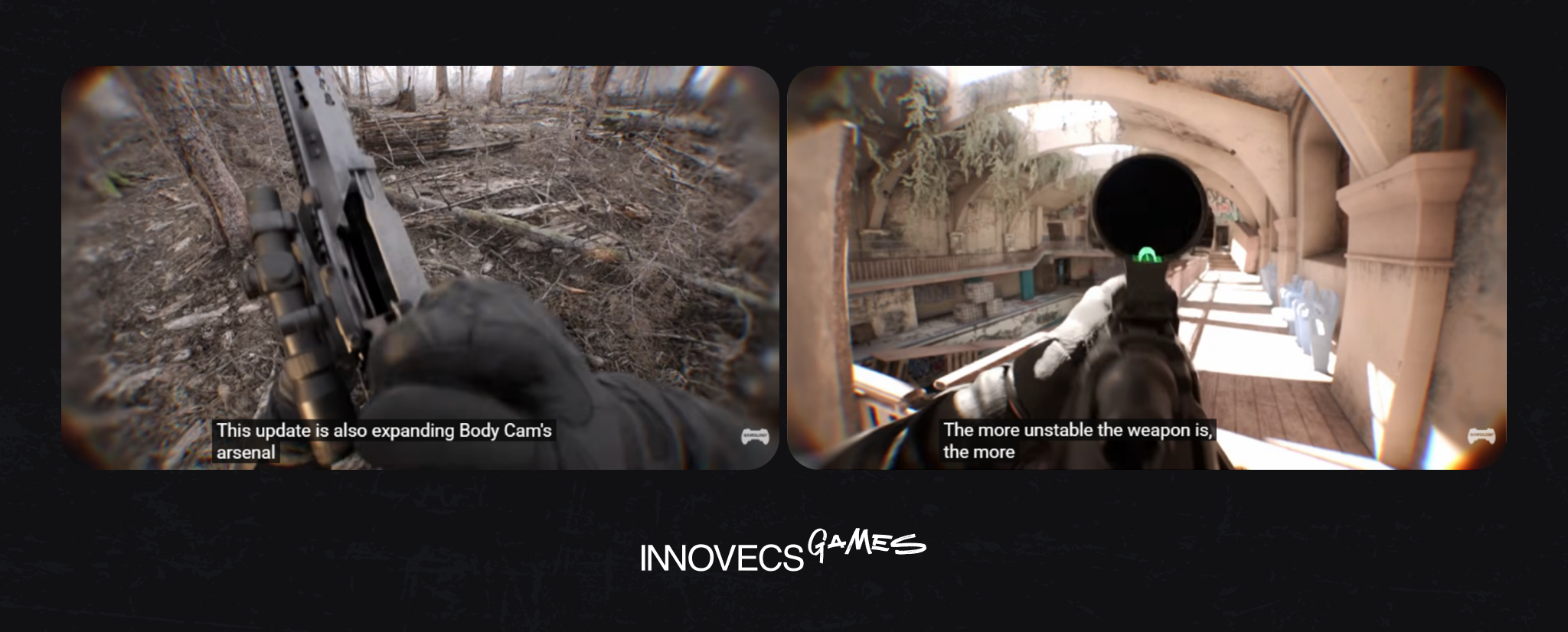
Before pulling the prototype apart, it helped to have a clear reference for the kind of physical, camera-driven image we were trying to understand.

Bodycam-style reference
Bodycam-style reference imagery used to establish the visual target for the reconstruction work.

This kind of reconstruction is valuable because it forces you to look past the first things you notice. Lens distortion or camera movement might be easy to identify, but exposure, timing, environmental detail, and smaller visual cues can be just as important to the final impression. The biggest improvement might come from adding a missing cue, or from realizing that something already present was doing too much. 

From there, the work became a matter of peeling back each layer, understanding what it contributed, and balancing it against the rest without treating any one part as the answer.

The Camera Cannot Behave Like a Player’s Eyes

In a conventional first-person setup, the view can follow the player’s orientation almost exactly. Turn the character and the view turns with them. A bodycam has a different physical relationship to the body, so that response cannot feel quite so direct. 

That meant introducing lag into the movement. If the player turns quickly, the camera takes a moment to catch up, and when it reaches the new orientation it cannot simply stop dead. I used overlap and settlement so the motion could continue, rebalance, and come to rest with the weight and recovery of a physical device. 

The system also had to account for six degrees of freedom: movement along three axes and rotation around three axes. That gave the camera room to react in more than a simple up-and-down motion as the body changed direction, accelerated, or settled. 

The distinction mattered from the start. The camera could not be a viewpoint with a collection of effects added afterward. It had to be a fundamental part of the experience, with its behavior influencing how the player perceived movement and the space around them. 

Balancing Authenticity with Control

There is a limit, though. Too much lag, distortion, or movement quickly becomes distracting, while making the camera too stable strips away much of the character that makes the bodycam look convincing. 

The aim was never to reproduce every imperfection of real footage. It was to identify which characteristics contributed to the experience and translate them into something that still felt readable, responsive, and comfortable to play. That balance mattered as much as the individual camera effects themselves. 
Movement Has to Come From the Body

Once the camera response was in place, the next question was what should drive it. 

A body-mounted camera does not move in isolation. It reacts to breathing, changes in pace, head movement, impact, and the small shifts that happen as a person changes direction. Even standing still introduces motion. I added an idle breathing cycle so the camera settled with the character and never appeared perfectly fixed in space. 

Movement Changes With Pace

Walking and running needed different responses. The faster the character moved, the more pronounced the camera response became; at a walk, it eased back. Head motion fed into the system as well: the natural bob from running could be amplified and offset through the camera, then reduced again as the pace dropped. 

Jumping created another kind of response. Because a bodycam sits on clothing or equipment and is not rigidly fixed to the skeleton, it needs a little independence from the body underneath it. Spring arms, camera offsets, overlap, and settlement helped create that sense of weight and recovery as the character moved. 

Animation had to stay closely tied to camera behavior as well. If the character accelerated, breathed, landed, or turned and the camera responded with the wrong timing, the movement stopped feeling human very quickly. 

Recreating the Behavior of a Real Camera

With the body motion in place, the device itself still had to behave like the camera we were trying to recreate. 

I worked through the optical characteristics as camera properties. The lens had a slight fisheye distortion based on the camera specification, along with chromatic aberration, vignette, blur, exposure behavior, and motion blur. A light projected from the device also had to interact with the environment as a light source in its own right. 

Dynamic depth of field was another part of that behavior. The system analyzed what the camera was looking at, kept the relevant subject sharp, and allowed the surrounding area to fall out of focus. The point was to let focus respond to the scene dynamically. 

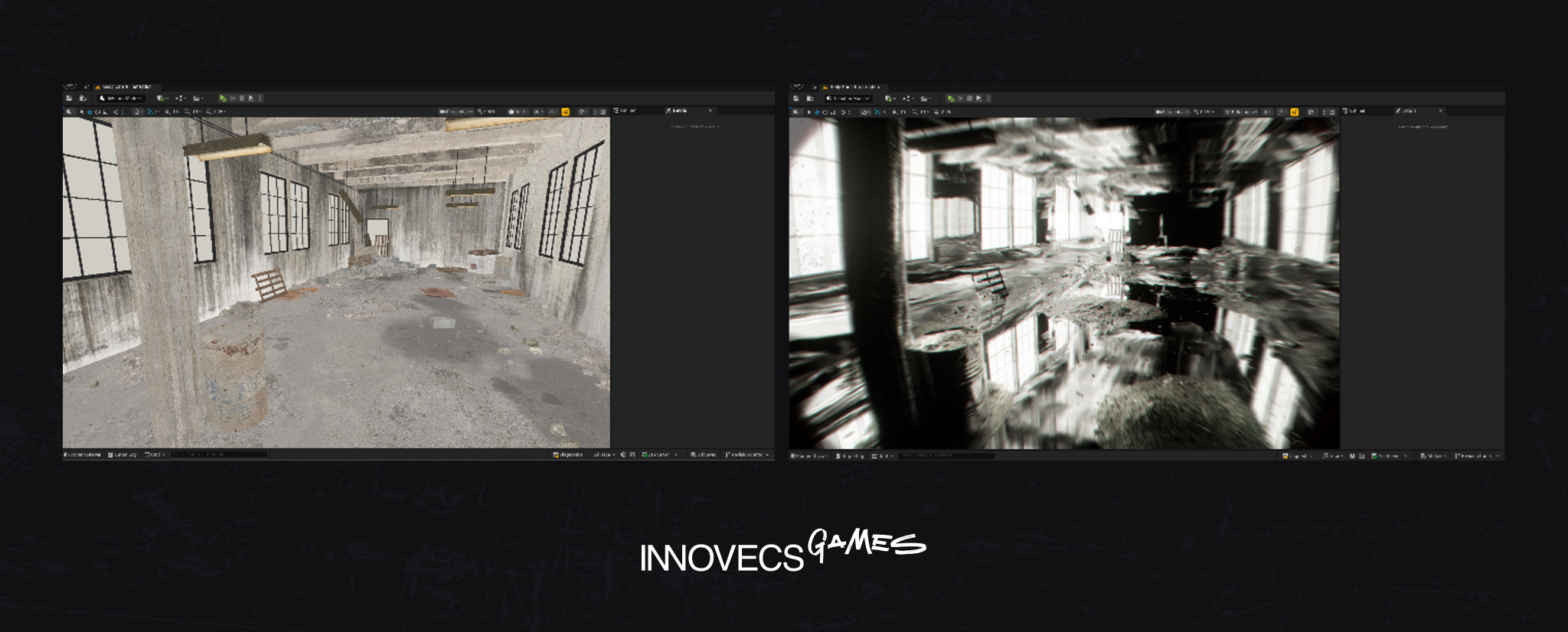
Breaking the image into stages helped show how much of the final character came from the way those passes interacted.

lightning effect
The same environment at two rendering stages: the unlit scene on the left and reflections on the right.

Post-Processing Has to Respond to the Scene

Post-processing followed the same logic. I treated it as part of the camera system from the start. Exposure, focus, distortion, and motion all had to respond to what was happening in the environment. 

The aim was a cohesive result in which the camera’s visual characteristics felt connected to the world around it. If those systems behaved independently, even strong effects could leave the image feeling assembled instead of captured. 

If It’s Too Perfect, It Doesn’t Work

There was another layer to the prototype that was easier to overlook than camera movement or focus behavior. Real footage is full of small imperfections, and removing too many of them can make an image feel strangely artificial, even when it is technically cleaner. 

We added dust particles that could catch the light depending on the camera position and micro-surface imperfections on the lens. Together with the slight fisheye distortion and chromatic aberration already built into the camera, those details added the irregularity we naturally associate with footage captured through a physical device. None of them was meant to dominate the frame. 

Lighting needed the same level of attention. I looked at real-world lighting systems and their specifications, including IES data, so the artificial light in the environment behaved in a way that made sense alongside the camera. Daylight had to belong to that same setup and follow the same physical logic.

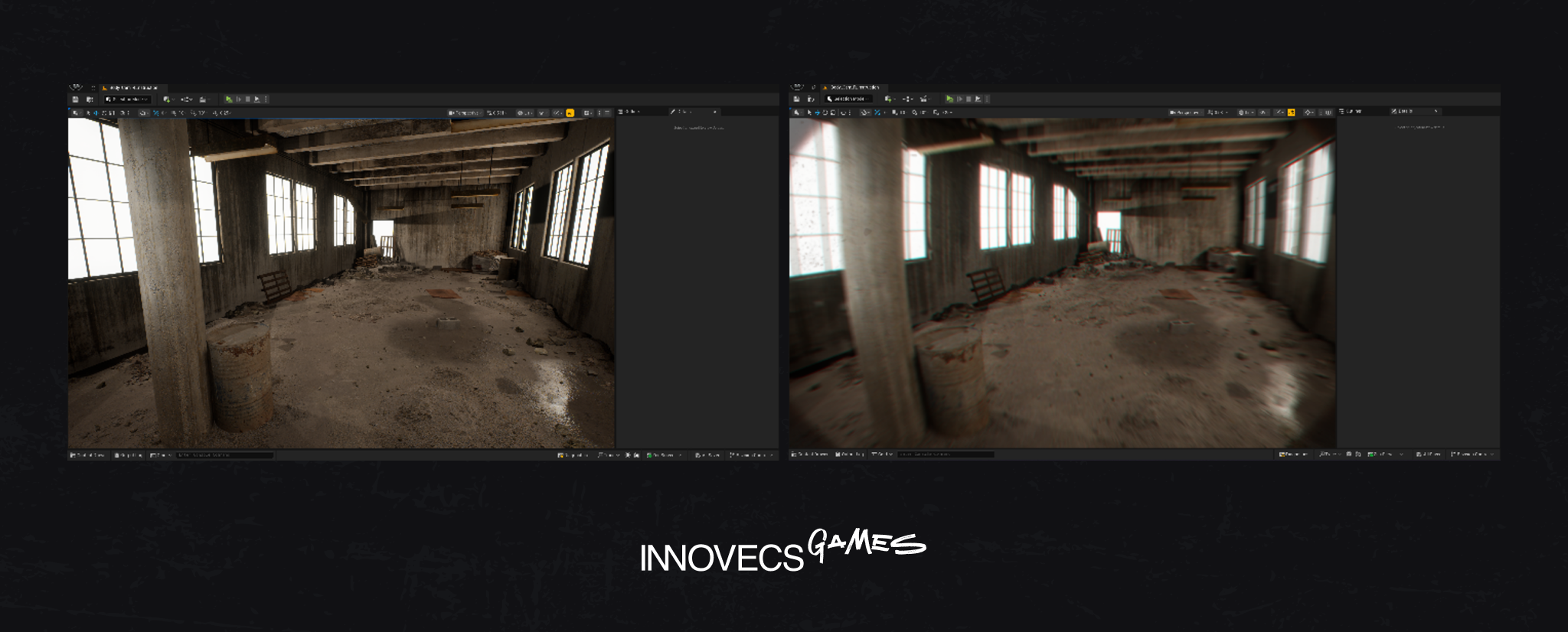
The next stage makes that accumulated effect easier to see.

post-processing pass
Lighting on the left and the post-processing pass on the right, before the final bodycam treatment was fully assembled. 

This is where one of the more counterintuitive parts of realism becomes important: if it’s too perfect, it doesn’t work. The goal was not to make every artifact stronger. It was to understand which imperfections belonged there, how much of each one the image needed, and how they interacted with the rest of the system.

There Was No Single Before-and-After Moment

I was asked whether there had been one change that suddenly made the prototype feel convincing. There wasn’t. 

You could put the camera system into a simple room and immediately recognize the bodycam behavior, but the illusion would still fall apart if the environment around it looked artificial. The reverse was true as well. A highly realistic room with the wrong camera response still felt unmistakably like a game. 

Post-processing could push the image closer, but without the right movement, animation, and smaller imperfections it remained only nearly there. A change to one layer altered the way the others read, so each adjustment had to be judged with the surrounding layers in mind. 

I tend to think of it like a recipe. Having the right ingredients is only the starting point. Their proportions still matter, and even the correct ingredients can produce the wrong result if the balance is off. 

That was the useful part of the exercise. The bodycam effect emerged gradually as the different systems began reinforcing each other. 

From Imitation to Innovation

Reconstruction gave us something concrete to take apart and test. The more interesting part came afterwards: understanding which systems created the character of the footage well enough to start pushing them further. 

Dynamic exposure, context-aware post-processing, and physically grounded camera movement gave us room to develop the experience further. Once we understood how those elements affected one another, the prototype could respond to the player and the environment instead of relying on a fixed collection of visual effects. 

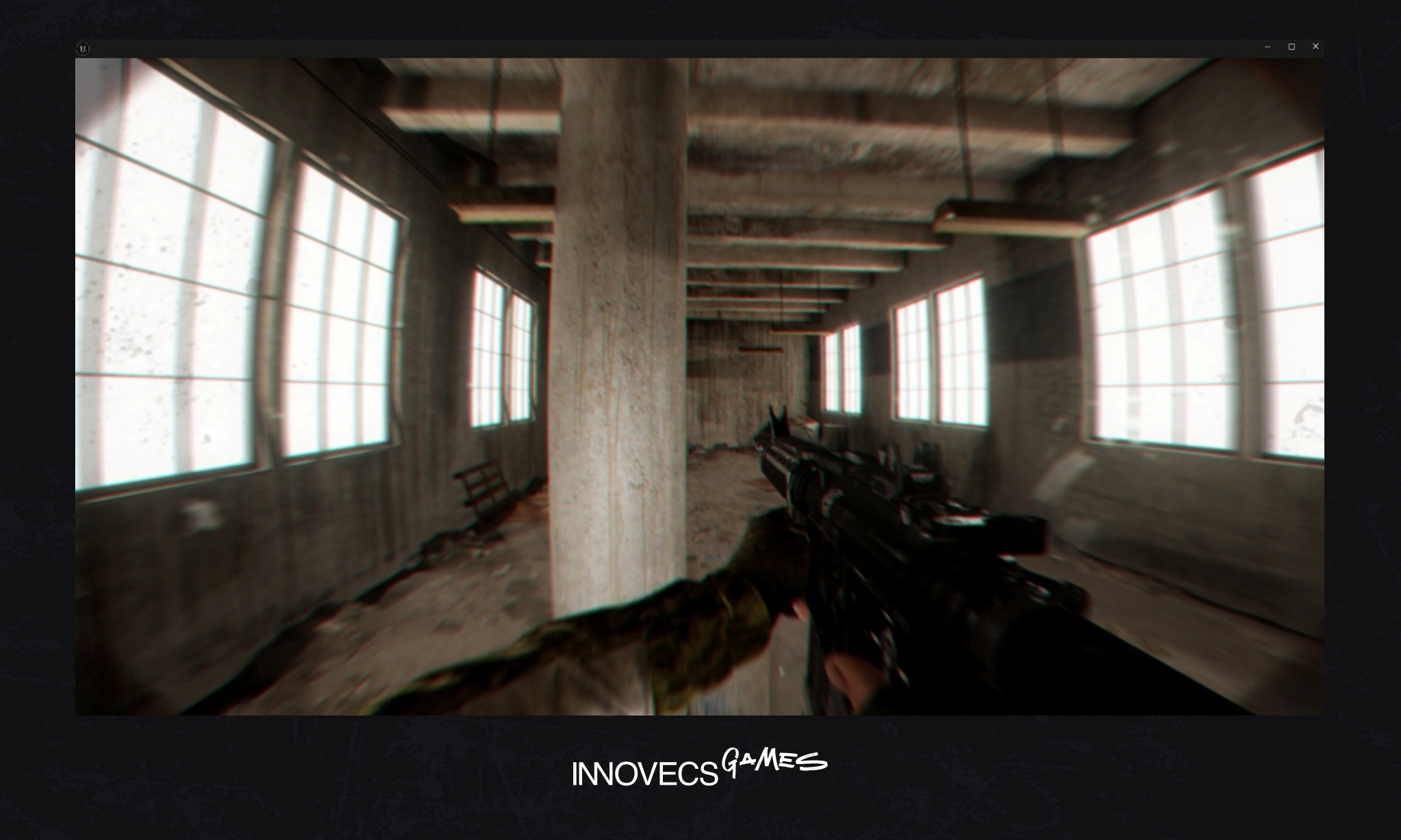
The final in-game view was where we could judge the result as a player would encounter it. 

completed bodycam prototype
The completed bodycam prototype running in-game.

For me, this is also where the value of technical art in pre-production becomes very clear. It is an approach we use at Innovecs Games as well: bringing art direction, engineering, and technical art together early gives us room to test how an experience actually feels before production has advanced far enough to make those relationships harder to rework.

A relatively quick prototype was enough to make moving through the same level feel markedly different from a conventional first-person experience. The change came from the combined behavior of motion, animation, visual treatment, and the smaller imperfections in play. 

That is ultimately what I was trying to understand: the difference between an image that resembles bodycam footage and an experience that holds together in play. When that balance is right, the same environment can feel like a different game. 

READY TO START YOUR PROJECT?
If you need assistance in building a product from scratch or supporting the existing one, drop us a line to discuss details, and we will reply within 24 hours.