Game Development Trends 2026
Game development moves fast. What was experimental two years ago is just how studios work now. The early adopters have already moved on.
What’s driving the biggest shifts in 2026 isn’t raw hardware. It’s how teams are structured, how developers use AI, which game engines they’re betting on, and how they think about production from day one. Workflow decisions that used to happen late in a project are now happening in pre-production.
This article covers the top trends shaping game development right now. Generative AI, mobile growth, new gaming platforms, live service games, the rise of smaller teams – there’s a lot happening. Here are the industry trends that matter heading into 2026.
The State of the Game Development Industry in 2026
The game industry market in 2026 is bigger than it’s ever been. It’s also more chaotic than a lot of studios expected.
Globally, the video game industry generated $189 billion in 2025, continuing a multi-year growth trend. Mobile gaming is still on the rise and accounts for roughly half of industry revenue through in-app purchases. Those numbers sound healthy. But underneath them, development costs are up, timelines are longer, and mid-sized studios are getting squeezed from both ends.
The BCG report pulled responses from hundreds of survey respondents across publishing, development, and platform roles. The findings point to a market where growth is real but unevenly distributed – bigger players are capturing more of it, and smaller studios are working harder to compete.
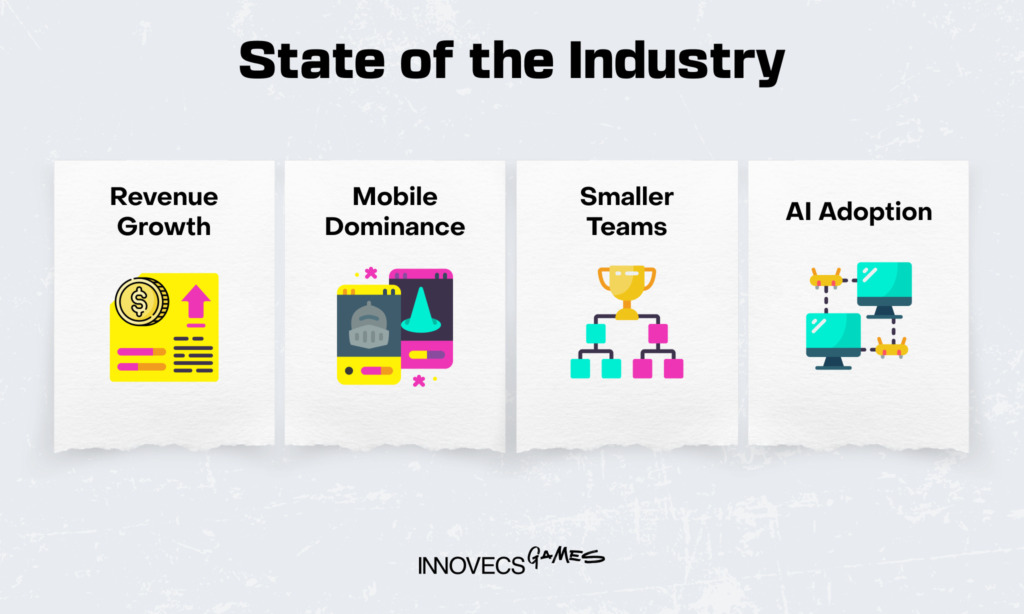
The structure of how games get made is changing too. Smaller teams are doing more, partly because automation handles tasks that used to require headcount. Financing looks different. A growing number of developers are finding that smaller studios combine resources to produce ambitious games that neither could tackle alone. Faster iteration, shorter feedback loops, continued growth. That’s the model gaining traction.
Distribution has shifted as well. A lot of developers aren’t thinking about shipping one finished game anymore. They’re thinking about what happens after launch – seasonal content, updates, systems that keep players engaged for months. The rise of live service games pushed this model mainstream, and now even studios that never planned to run a live game are building infrastructure that supports it. Player engagement has become the metric that matters most, long after launch day.
The studios doing well right now aren’t necessarily the ones with the biggest budgets. They’re the ones that can build fast, adjust fast, and hold player attention past week one.
Key Game Development Trends in 2026
Several development trends are reshaping how the industry operates. From generative AI to new market distribution models and evolving production approaches, these shifts affect how developers build, launch, and support games across every major platform. Here are the biggest trends worth paying attention to right now.
AI in Game Development
AI in game development stopped being a conversation about the future a while ago. It’s part of daily production now for a lot of developers.
The practical uses are less dramatic than the hype suggests. Concept art variations. Dialogue drafts. Asset creation for environments that would’ve taken weeks to build manually. Early testing setups. None of it replaces creative direction, but generative AI cuts the time between an idea and something you can actually play.
It’s also changing who can do what on a team. Junior developers are handling tasks that used to require more experience, because the tools give faster feedback on gameplay decisions and mechanics. That’s useful, but studios need to think harder about quality control as a result.
Live Service Games
Live service games aren’t really a trend anymore. They’re a business model that a huge portion of the industry has committed to. Regular updates, seasonal content, progression systems, events, rewards; the goal is keeping players engaged for years, not weeks.
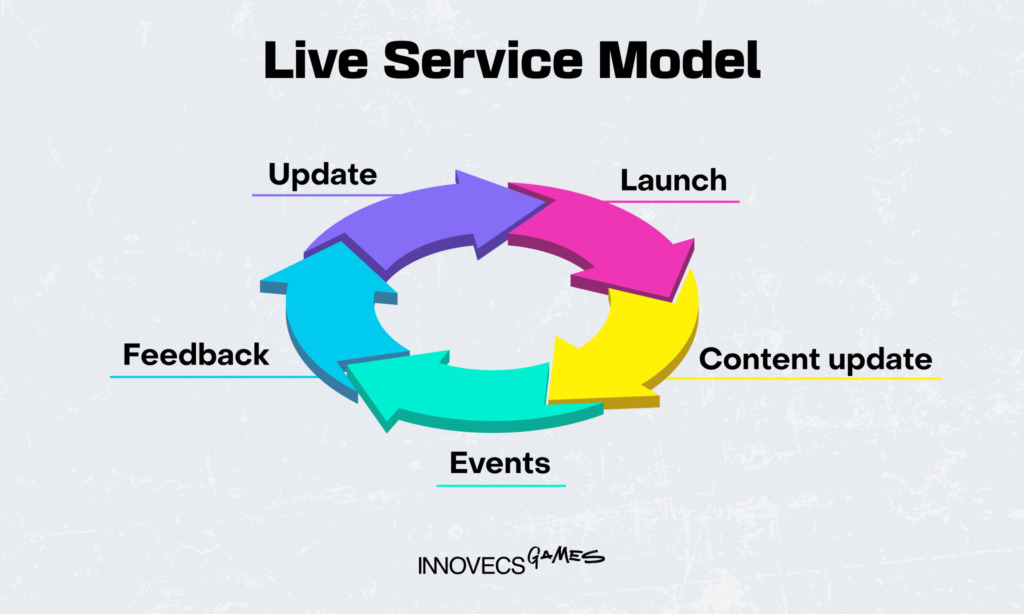
For many studios, it works when it works. Successful live titles generate money long after launch. But the production demands are real. You need pipelines built for continuous delivery. Community management becomes a core function. The game is never really finished. A lot of developers underestimated that part.
User-Generated Content and Creator Models
Roblox and Fortnite Creative didn’t invent user-generated content, but they proved how far it could scale. Players building games inside games, communities creating content that keeps them relevant… it’s a different model than traditional development.
For companies, the appeal is obvious. A thriving creator ecosystem creates new opportunities and extends the life of a platform far beyond what internal teams could sustain alone. Game creators building inside existing platforms are driving innovation in ways the industry didn’t fully anticipate. The hard part is building the tools, moderation systems, and incentives that make it work.
Procedural Content Generation
Procedural generation has been around for decades. What’s changed is how much generative AI has expanded what’s possible. Environments, missions, narrative branches, level layouts – systems that used to require significant manual work can now be shaped procedurally.
It’s not hands-off. Developers still set the rules, review the output, and cut what doesn’t work. But the volume of content smaller teams can produce has gone up considerably, which matters in a market where player expectations keep rising and the pressure to deliver more content faster is real.
Cross-Platform Game Development
Players expect their progress and purchases to move across consoles, PCs, and mobile devices. Same game, same account, same purchases. That’s just the expectation now.
Modern game engines make cross-platform development more manageable than it used to be. It still adds complexity, but game developers that skip it are cutting themselves off from a significant chunk of the market. Platforms continue to multiply, and reaching players across all of them has become one of the more practical development trends for growing an audience.
Cloud Gaming
Cloud gaming has taken longer to go mainstream than a lot of people predicted. The infrastructure is getting better, latency is less of a problem than it was, and access to high-end gaming experiences on low-end hardware genuinely expands the market.
It’s not the dominant model yet. But it’s not going away, and for certain audiences across various devices it fills a real gap in how people play and access games around the world.
AR Game Development
Augmented reality is still finding its footing in games. The hardware has improved. There are genuine use cases. But outside of mobile AR, it hasn’t produced a breakout format yet beyond what Pokémon GO established years ago.
The technology keeps developing. The line between physical and digital environments keeps blurring. AR gaming experiences have real potential – the next big thing in this space just hasn’t arrived yet.
VR Game Development
Virtual reality is a smaller slice of the overall market and probably will be for the foreseeable future. That said, the games being made for VR now are considerably better than the first wave. Game engine support has improved, development costs have come down, and the gaming experiences on offer are more compelling than they were even two years ago.
It’s an interesting way to game. Just a niche one compared to where the broader market is focused.
Hybrid-Casual Games
Hybrid-casual has become one of the most active spaces in mobile gaming. These games borrow the low barrier to entry from casual games and layer in progression systems, meta loops, and monetization that keep players around longer.
The format works. A lot of mobile developers have repositioned around it over the past few years, and it continues to lead growth in the mobile market. For studios looking at where mobile money is moving, this is it.
Real-Time Multiplayer Games
Multiplayer is an expected feature these days. Real-time networking, cooperative modes, competitive play, community systems. Players want games that connect them to other people, and new titles that lack those features increasingly struggle to compete.
Building it well is still hard. But the tools and infrastructure have matured enough that it’s no longer the technical barrier it once was for most game developers.
Game Development Outsourcing
Outsourcing is how a lot of studios manage production without overextending internal teams. Asset creation, QA, engineering support, mobile game development – external partners handle work that would otherwise slow down core development.
Done well, it lets developers stay focused on gameplay systems and creative decisions that define the game. The key is finding partners who understand the game development process and can lead their portion of work without constant supervision.
Technologies Powering Modern Game Development
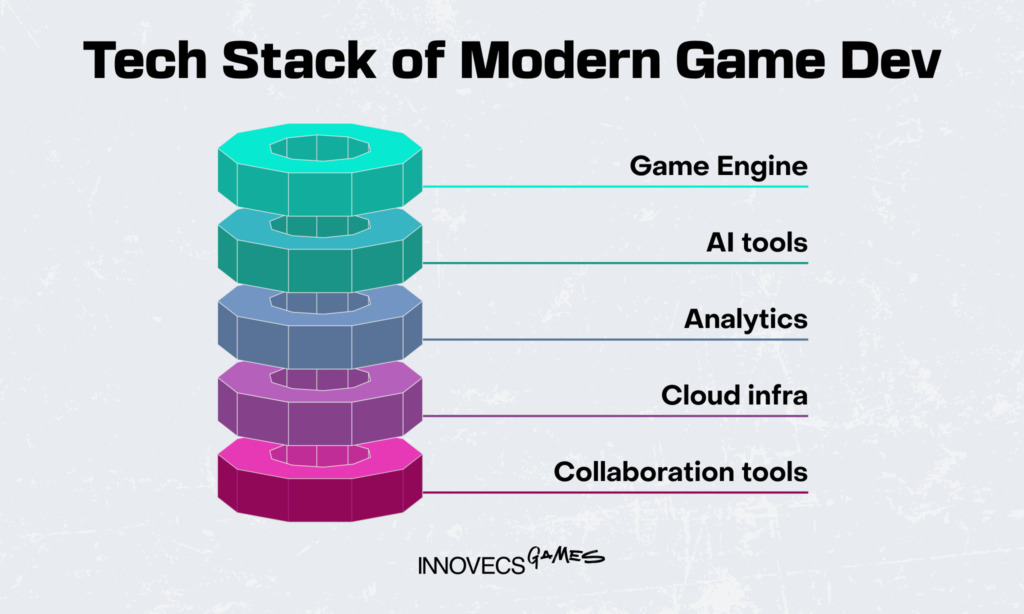
Many of the development trends shaping the industry today are tied to the tools running behind the scenes. As projects grow more complex, developers are leaning on integrated technologies that support faster iteration, cross-platform releases, and large-scale creation.
Game Engines
Unity and Unreal are the dominant game engines, and at this point they function more like full production environments than just rendering tools. Physics, lighting, animation, asset pipelines – it’s all in one place.
That’s mostly good. Shared tooling means faster onboarding, easier collaboration, and a common language across distributed teams. The downside is that a lot of games are starting to look and feel similar. When developers across the industry use the same game engine with similar default workflows, a certain sameness creeps into the market.
The other interesting development is where game engines are showing up outside of games. These real-time engines are expanding beyond entertainment – architecture, film, automotive design, and simulation industries are adopting them for rapid prototyping and high-fidelity visualization. It’s a next generation of use cases that the game world essentially built by accident.
AI for Game Development
Widespread adoption of generative AI tools in production is still uneven across the industry. Some developers are using them heavily. Others are watching and waiting.
The caution makes sense. Current limitations include governance, data ownership boundaries, and reliability concerns when AI systems generate inaccurate content. Generative AI is genuinely useful. The rules around it are still being worked out, and industry leaders are approaching it carefully as a result.
Game Analytics Platforms
Analytics have become non-negotiable for games with ongoing support. Session length, progression drop-off, behavioral patterns – the data shows developers where players are losing interest before the community does.
For live games especially, that feedback loop drives decisions about what features to update, fix, or cut. It’s also one of the clearest examples of how data is now central to the game development process across the industry.
What is the Future of Game Development?
The future of game development won’t be defined by a single breakthrough. It’ll be shaped by how technologies and production models work together as the industry continues to evolve. Here are the development trends most likely to lead that shift.
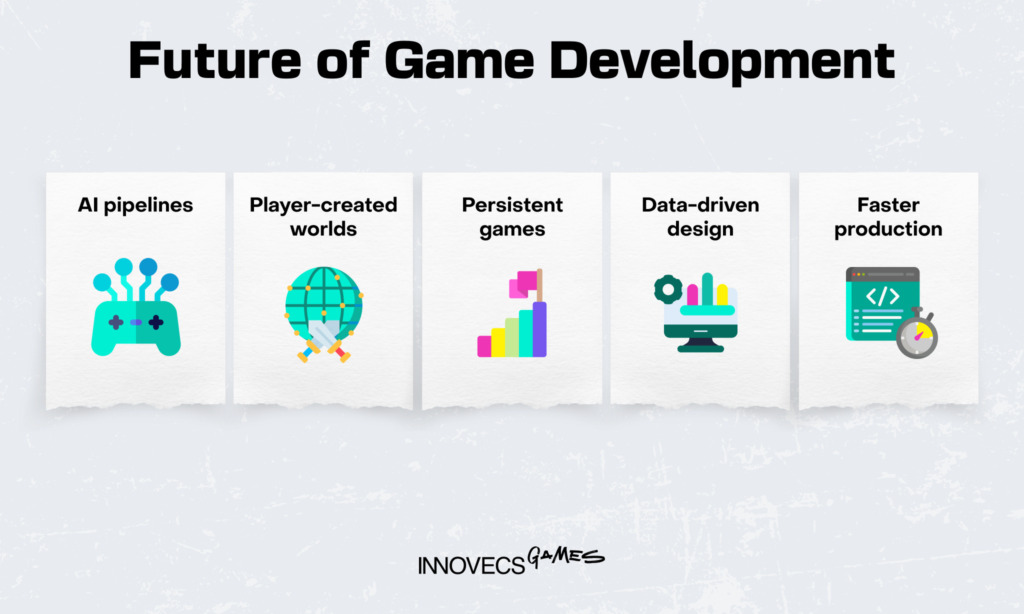
AI-Powered Game Production
AI isn’t replacing game developers. It’s changing what they spend time on. Repetitive tasks and manual production work are increasingly handled by tools. The creative and strategic decisions still need people.
As generative AI matures, the game developers who figure out how to integrate it without losing creative quality are going to lead. That’s where real competitive advantage is heading in the next generation of game production.
Player-Created Content Ecosystems
Community creation is becoming a legitimate part of how games grow. Players building levels, mods, experiences inside existing platforms – it extends the life of titles in ways internal teams can’t match alone.
This model creates many opportunities for companies building platforms. Nurturing that ecosystem is now part of the product strategy, not an afterthought. The world of game development is moving toward creation being shared between developers and the communities around their games.
Persistent Online Worlds
More games are being designed to evolve after launch. New events, systems, story updates – the game at launch is version one. Developers need to plan for continued growth from the start, not retrofit it later. The biggest trends in online game design all point in this direction.
Data-Driven Game Design
Player behavior data has become one of the most useful inputs in modern game design. Not because data makes creative decisions, but because it surfaces problems faster than playtesting alone can.
Where are players dropping off? What mechanics are they ignoring? What gameplay features are working better than expected? The answers shape what gets fixed and what gets built next across the evolving landscape of modern development.
Faster Game Development Pipelines
Pipelines are getting faster. Better collaboration tools, more automation, earlier prototyping – developers can validate ideas before committing to full production. Faster iteration is a real differentiator in a market this competitive, and the teams that build that capability tend to lead. It’s one of the top trends driving innovation across the industry right now.
Why Businesses in the Game Industry Choose Innovecs Games
A lot of companies in the game industry reach a point where internal capacity isn’t enough. Deadlines tighten, scope grows, or a project needs skills the current team doesn’t have.
Innovecs Games works with game studios and publishers at those moments. Technical performance, production support, flexible resourcing – we help game developers move faster without sacrificing quality. The game development market is growing, and analysts project a steady compound annual growth rate for development services in the years ahead. Having a reliable external partner isn’t a luxury anymore. It’s how modern studios compete.