Esports tournaments have long become grand spectacles, drawing massive audiences both online and in-person. Major events are hosted in state-of-the-art arenas, and the competitive gaming scene has evolved into a professional ecosystem with sponsorships, endorsements, and media rights. The professionalization of esports organizations and the increased recognition from mainstream media have elevated some esports athletes to celebrity status. Furthermore, advancements in virtual and augmented reality technologies have enhanced the viewer experience, providing immersive perspectives and interactive elements.
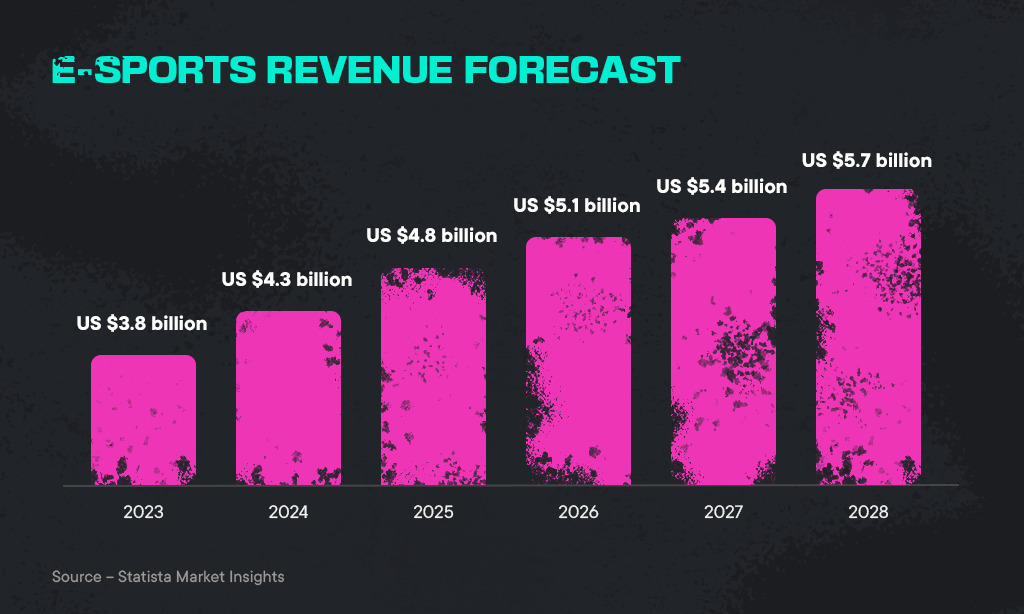
With such bombastic growth, the industry is bound to run into some growing pains. According to SportsPro, the biggest current challenges in e-sports are:
- Over-reliance on sponsorships. The industry is dependent on big money investors, and the said investors expect to turn a profit. While e-sports have gained unprecedented popularity in less than a decade, they are still not as lucrative as regular sports matches, so the pressure is on.
- Macroeconomic circumstances. The cumulative effect of rising interest rates, inflation, supply chain pressure and the cost of living crisis does some splash damage on all industries, and e-sports are no exception.
- Public misconceptions. The stigma around e-sports being nerdy and adolescent is lifting, but not as fast as many had hoped. It seems some more time will have to pass before e-sports and IRL sports stand on equal footing.
Nevertheless, E-sports is undoubtedly one of the most attractive businesses for publishers, and that its growth is believed to be sustainable for the coming years in both developed and developing markets. New trends emerge every day, and 2023 has been significant with the takeoff of live betting, broader female inclusion, and introduction of AR/VR extensions.